
Full Mouth Reconstruction
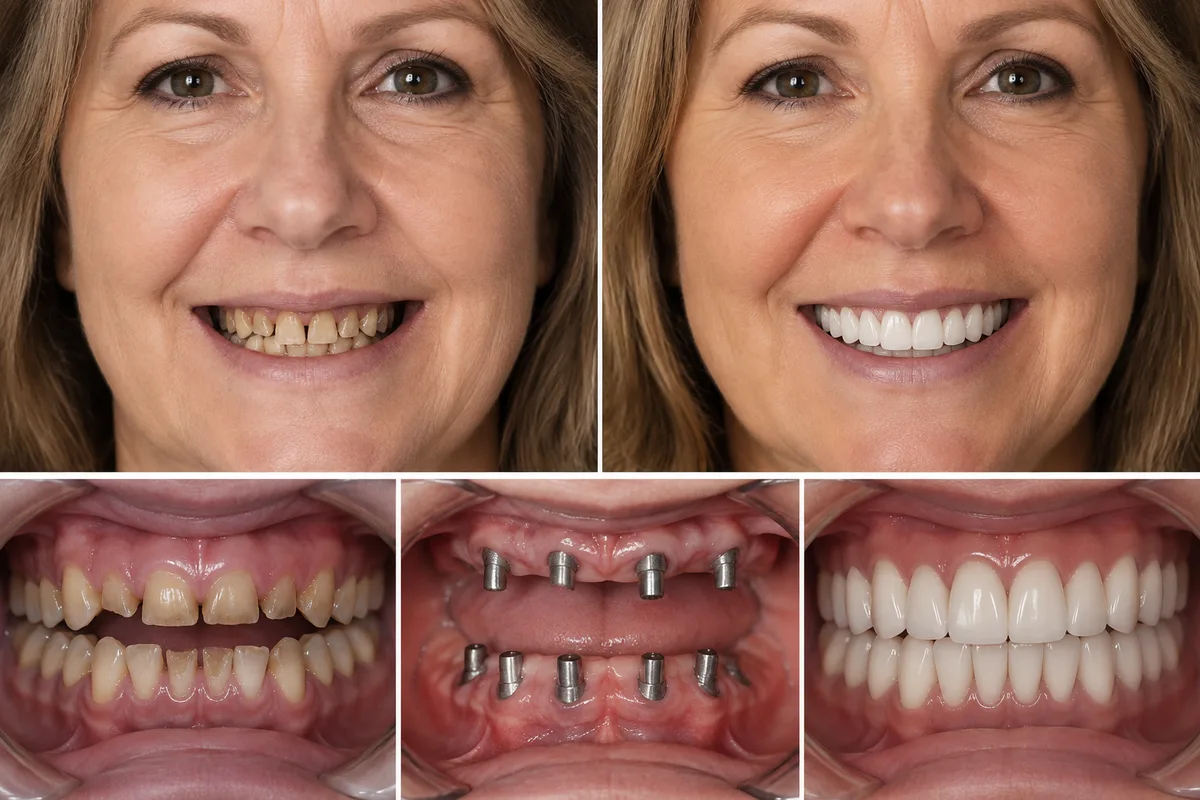
Full Mouth Reconstruction
Full mouth reconstruction refers to the process of rebuilding or restoring most or all of the teeth in both the upper and lower jaw. It is typically considered when a person has multiple issues affecting the teeth, gums, bite, or supporting bone — whether from decay, wear, injury, or long-term tooth loss. Because every mouth is different, a reconstruction plan is built around each patient's specific combination of needs.
Conditions Commonly Addressed
- Extensive Tooth Loss — missing teeth affecting chewing, speech, or facial support.
- Worn or Broken Teeth — damage from grinding, injury, or years of decay.
- Bite Problems — misalignment that puts strain on jaw joints and remaining teeth.
- Gum and Bone Concerns — issues that affect the foundation supporting the teeth.
Treatments That May Be Included
- Dental Implants — replacing missing tooth roots as a foundation for new teeth.
- Crowns and Bridges — restoring damaged teeth or closing gaps between them.
- Dentures and Implant-Supported Dentures — replacing larger numbers of missing teeth.
- Root Canals and Bone Grafting — addressing infected teeth or bone loss when needed.
How Care Comes Together
Because full mouth reconstruction often draws on several areas of restorative dentistry, treatment is sequenced carefully so each step supports the next — building toward a mouth that functions comfortably and holds up over time.
This content is for general information only and isn't dental or medical advice. Talk with your dentist or orthodontist about your own situation. If you have a medical emergency, call 911.